
Credit fundamentals · Loan eligibility
How does your credit score affect loan eligibility?
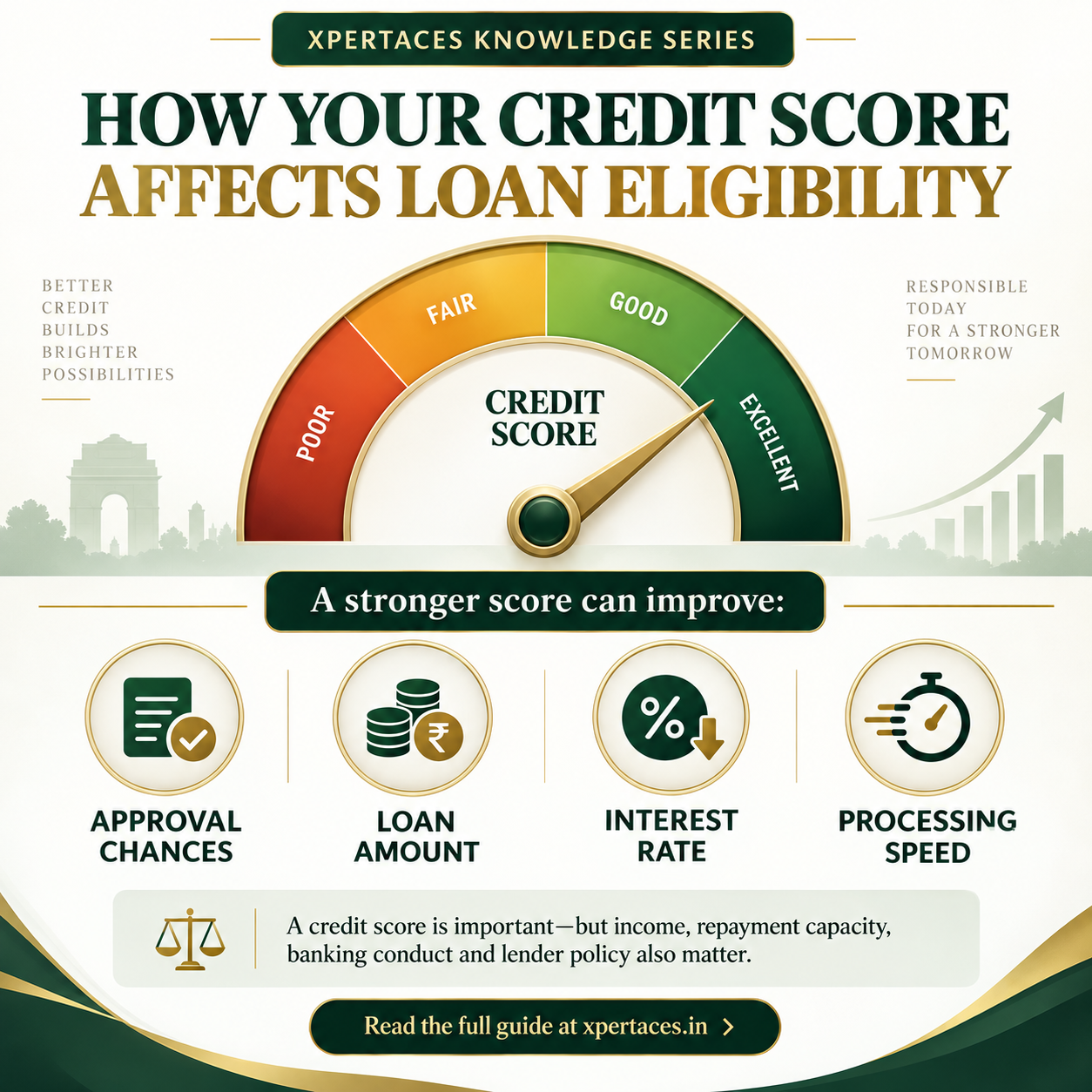
A stronger score can improve how a lender views an application. But approval, loan amount, pricing and terms depend on the complete borrower profile—not on one number alone.
This tutorial continues our earlier guide, “What does your CIBIL score tell a lender?” Read that first if you want to understand how a score is created and how it differs from the full credit report.
Credit score is the lender’s first signal—not the final decision
When an individual applies for a loan, the lender generally reviews the credit score and detailed credit report to understand past borrowing and repayment behaviour. A higher score usually indicates lower observed credit risk and improves the likelihood that the application will move to detailed assessment.
A low score may cause a lender to decline the application at an early stage, apply stricter conditions or seek more comfort. A high score, however, is not an automatic approval. The lender still evaluates income, obligations, stability, documentation, security and its internal credit policy.
Five ways the score can influence your loan
Approval chances
A stronger score can help an application clear the lender’s initial screening and proceed to a full assessment. Minimum requirements vary by lender and product.
Eligible loan amount
Credit history can influence the lender’s comfort with the requested exposure. The final amount still depends heavily on income, existing EMIs and repayment capacity.
Interest rate and charges
Some lenders use risk-based pricing. A stronger credit profile may support more favourable pricing, while a weaker profile may attract a higher rate or stricter terms.
Security or conditions
Depending on the case, a lender may seek collateral, a co-applicant, a guarantor, a lower loan-to-value ratio or other safeguards. These are policy-led decisions.
Processing experience
A clean report with consistent repayment behaviour can reduce avoidable questions. Faster processing is never guaranteed because income and property checks may still be required.
Choice of lender
Different institutions have different score cut-offs, risk appetites and programmes. A case declined by one lender is not automatically eligible—or ineligible—everywhere else.
Why two people with the same score may get different outcomes
The score summarises credit history, but loan eligibility also depends on the application being made. Two borrowers with the same score can have different incomes, existing obligations, employment or business stability, loan purposes, property quality and repayment capacity.
Their credit reports may also tell different stories. One may have a long, diversified history with low balances; another may have a short history, high utilisation or several recent enquiries. The headline score can be similar while the underlying risk profile is not.
A simple eligibility framework
Credit behaviour
Score, repayment history, overdue accounts, settlements, utilisation, enquiries and the nature of existing facilities.
Repayment capacity
Verified income or cash flow, existing EMIs and the ability to comfortably service the proposed instalment.
Profile stability
Continuity of employment or business, banking conduct, age, residence and overall financial discipline.
Product and security
Loan purpose, requested tenure, property or collateral, loan-to-value and compliance with the lender’s programme.
A healthy credit score strengthens the application. Adequate income determines affordability. The right product and lender policy determine whether the complete case fits.
What if your score is strong but the loan is declined?
- The requested EMI may be too high relative to income and existing obligations.
- The employer, business profile, location or property may fall outside the lender’s policy.
- The credit report may contain a concern not visible in the headline score.
- The borrower may not have provided complete or verifiable information.
- The requested amount, tenure, end use or product may not fit the programme.
Instead of applying repeatedly, first understand the decline reason. Multiple applications in a short period can add enquiries to the report and make the profile look credit-hungry.
What if your score is low?
A low score does not mean that borrowing will remain impossible forever. Start by downloading and reviewing the complete report. Identify genuine overdue amounts, high revolving balances, settled or written-off accounts, repeated enquiries and any incorrect information.
- Pay all current EMIs and card dues on time.
- Reduce overdue balances and use revolving limits prudently.
- Do not submit simultaneous applications to several lenders.
- Raise a formal dispute for genuine reporting errors.
- Allow positive repayment behaviour time to appear in the report.
Avoid anyone promising an instant score increase or guaranteed approval. Credit improvement is generally the result of accurate reporting and sustained financial discipline.
Before submitting your next loan application
- Review your score and full credit report.
- Calculate existing monthly obligations and the new EMI you can reasonably afford.
- Keep income, banking, KYC and property documents ready.
- Explain any past delay, settlement or unusual credit event honestly.
- Select the product and lender that fit your complete profile.
- Submit focused applications rather than applying everywhere.
For channel partners
Use the credit score as a screening input, not as the whole credit decision. Review the report, identify the reasons behind the number and assess income, obligations, stability, security and loan purpose before choosing a lender. A properly assessed case protects the borrower from unnecessary enquiries and helps the lender receive a more coherent proposal.
Sources and disclaimer
This educational guide draws on consumer information published by TransUnion CIBIL. It is general information and not a promise of eligibility, pricing or approval. Every lender independently assesses applications under its prevailing credit policy.
CIBIL: Credit score and loan basics ↗
CIBIL: Loan approval process ↗